What native means
A native tree grows in a region naturally, without people having brought it there. Over thousands of years it has adapted to the local soil, the cold winters and the short summers, and the local insects, birds and fungi live with it. Plant a native tree and you give all of them a home.
Norway spruce: the backbone
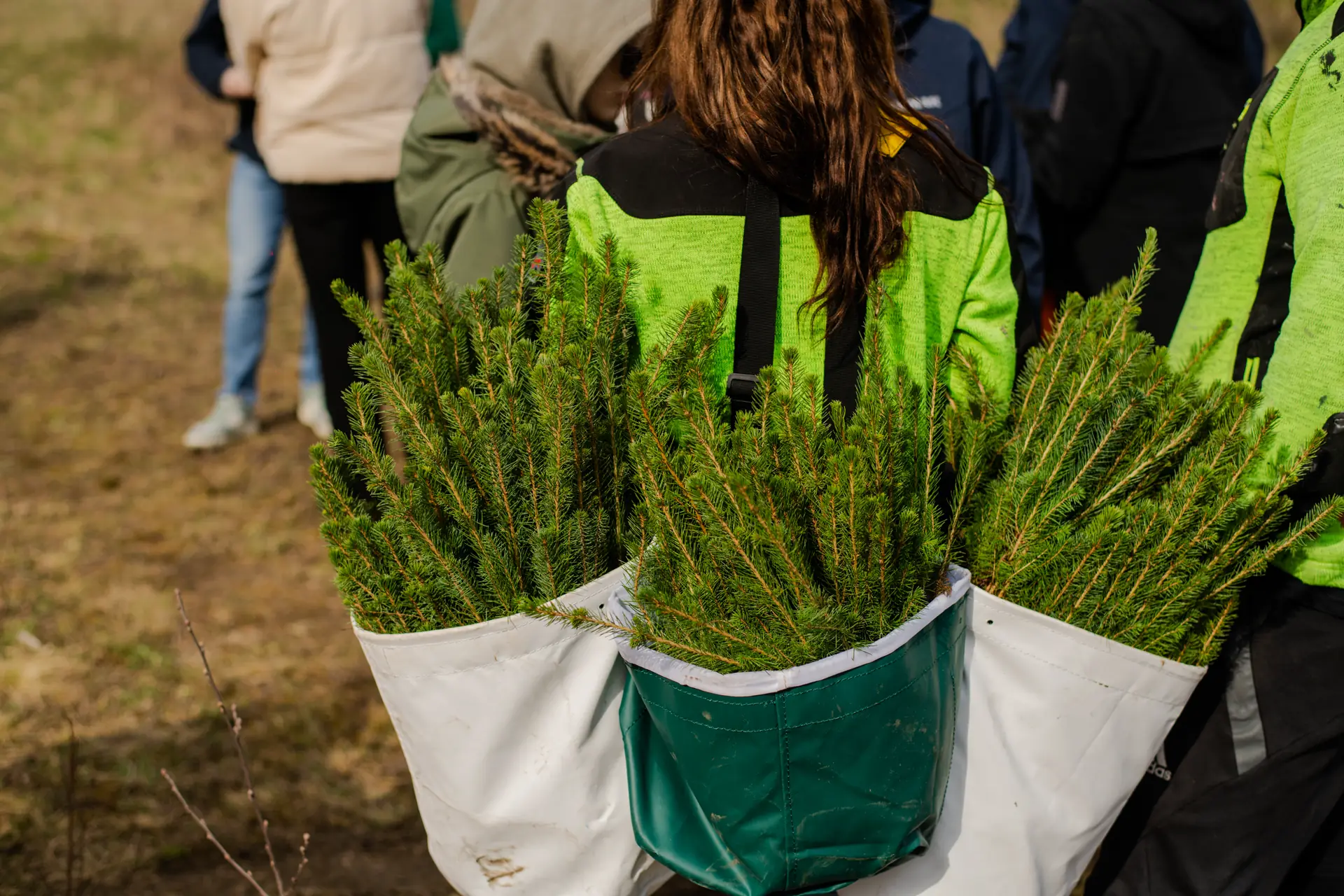
The tall, dark evergreen of the northern forest grows 30–50 metres tall and often lives for 200–300 years. Spruce grows well in shade, so in a young mixed forest it often grows up under birches before reaching the top. Its dense branches shelter birds in winter, and red squirrels and crossbills feed on the seeds in its cones.
Scots pine: the tough one
Pine loves light and copes with dry, sandy and poor soil, so it is often among the first trees on open land. Its deep taproot holds it firmly in storms, and it can live for up to 700 years. Pine forests are light and open, with heather, lichen and blueberries underneath.
Silver birch: the pioneer
Birch grows quickly on open land and prepares the ground for slower trees. Its fallen leaves enrich the soil, and more than 300 insect species live on it, which in turn feed many birds. Its white bark brings light to a young forest.
Stronger together
A forest of one tree species is fragile. A mix of spruce, pine and birch grows on different kinds of soil, gives shelter and food to more birds and insects, and copes better with storms, drought and pests. That is why we plant all three, choosing the mix for each piece of land after testing its soil.